
Renewal tracking for developers is something that usually becomes an issue over time. If you’re a developer or run a small agency, you’re probably not a hosting company. Yet in practice, you still provide hosting, domain names, and various subscription-based services to the clients you work with.
The difference, however, is crucial:
– You don’t sell these services to the general public for direct purchase
– You provide them to clients you already have an ongoing relationship with
In other words:
- you’ve built a website or an eShop for them
- you offer support or maintenance
- and “along with that,” you provide hosting, domains, and subscriptions
Over time, these services stop being just add-ons.
– They become recurring revenue.
And that’s where the problem begins.
At this point, many developers turn to tools like WHMCS or various CRMs. The issue is that these tools are typically built for a different purpose:
either for hosting companies with complex automation needs, or for sales teams focused purely on leads and deals.
But for a developer who simply wants to properly track renewals and have a clear view of their income, these tools are often either overkill or fail to address the real need.
– We’ll go deeper into this in a separate article.
In this article, we’ll focus on the core problem:
– You don’t have a clear view of your renewals and the revenue that comes from them.
The problem you don’t notice at first
When you have only a few clients, things are simple.
You roughly know:
- who is paying
- when something expires
- what money to expect
But as your business grows:
- services increase (hosting, domains, maintenance)
- renewal dates multiply
- recurring revenue grows
And that’s when you start losing visibility.
The hidden problem: Recurring vs one-time revenue
This is where the biggest mistake happens.
Most developers see all income the same way:
- a €1,000 project
- €100/year hosting
- €20/month maintenance
– It all appears as “revenue”
But it’s not the same thing.
Why?
- A project is one-time
- Hosting is recurring
- Maintenance is recurring
If you don’t separate them:
– You don’t know your actual monthly income
– You don’t know what’s stable and what isn’t
– You can’t forecast
– And you end up operating blindly
The value of each client (that you don’t see)
Another critical point:
– Not all clients have the same value
Example:
- Client A: €250/month (€12,346 total so far)
- Client B: €7,152 project (one-time)
Who is more important?
If you only look at invoices:
– Client B seems more valuable
If you look over time:
– Client A is far more valuable
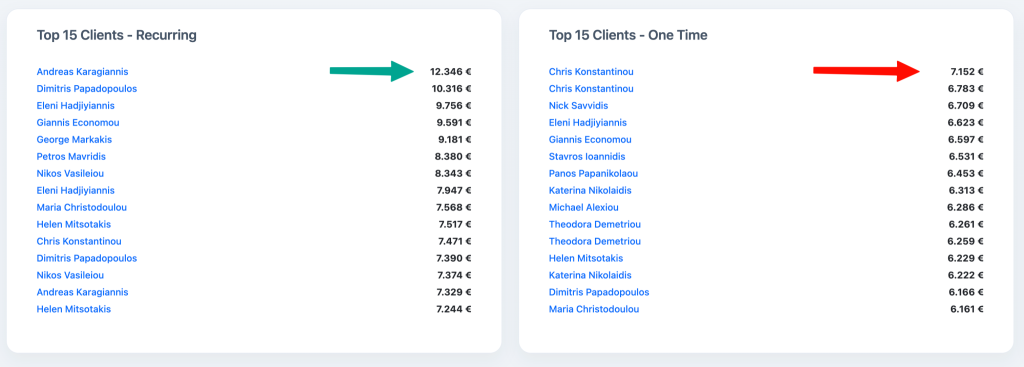
– Most setups don’t show this
– They don’t connect clients with recurring revenue
– And that leads to bad decisions
What “renewal tracking” actually means
Most people think renewal tracking is:
- reminders
- emails
- invoices
But that’s just the surface.
In reality, it means:
- knowing what renews and when
- knowing how much revenue is tied to those renewals
- seeing what’s coming next month in one place
- connecting renewals with clients and services
– In other words: renewals = future revenue
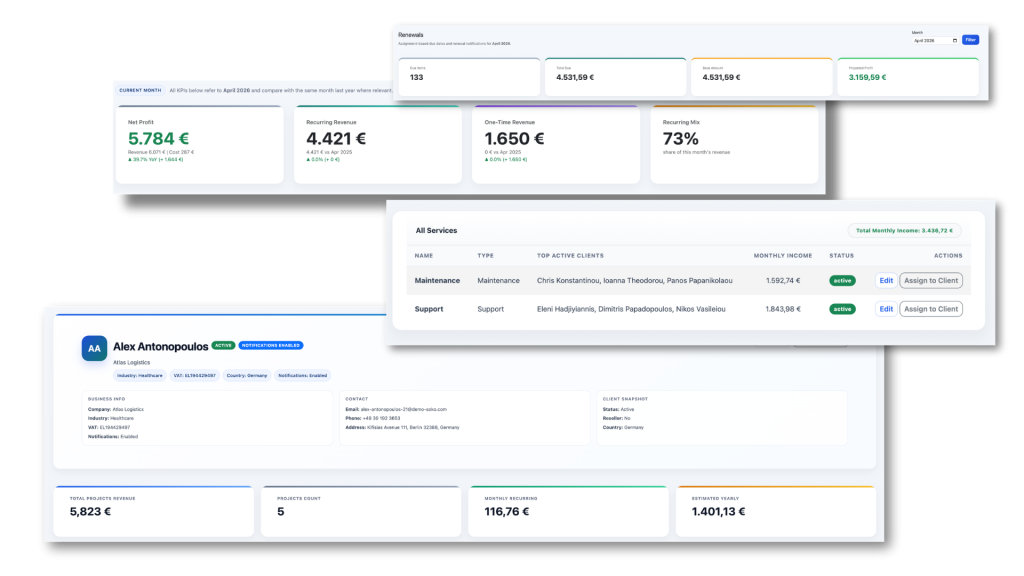
The core gap: renewals without business visibility
In most setups, renewals exist… but in fragments:
- emails in your inbox
- dates across different tools
- invoices somewhere else
The result:
-No single source of truth
-No forecasting
-No clarity
– You know “something renews,” but not what it means for your business
How it should look
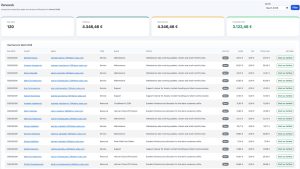
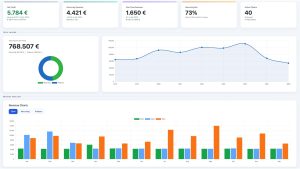
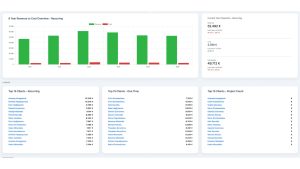
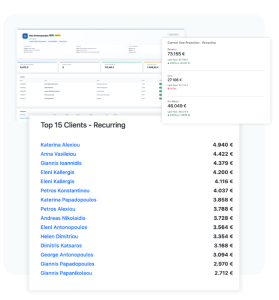
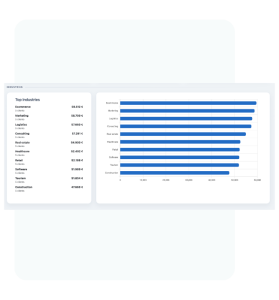
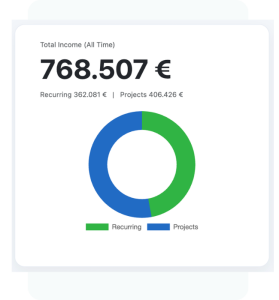
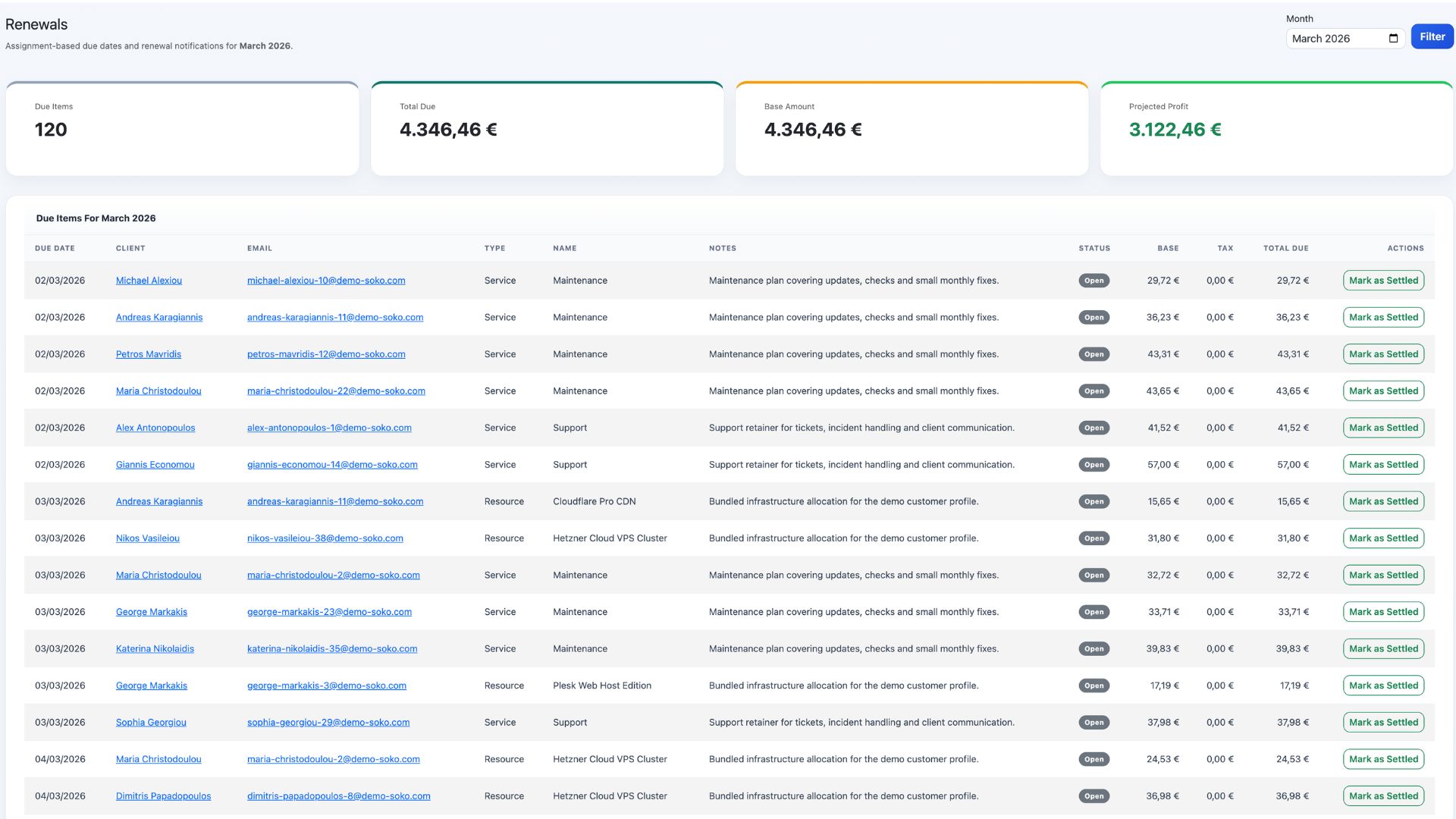
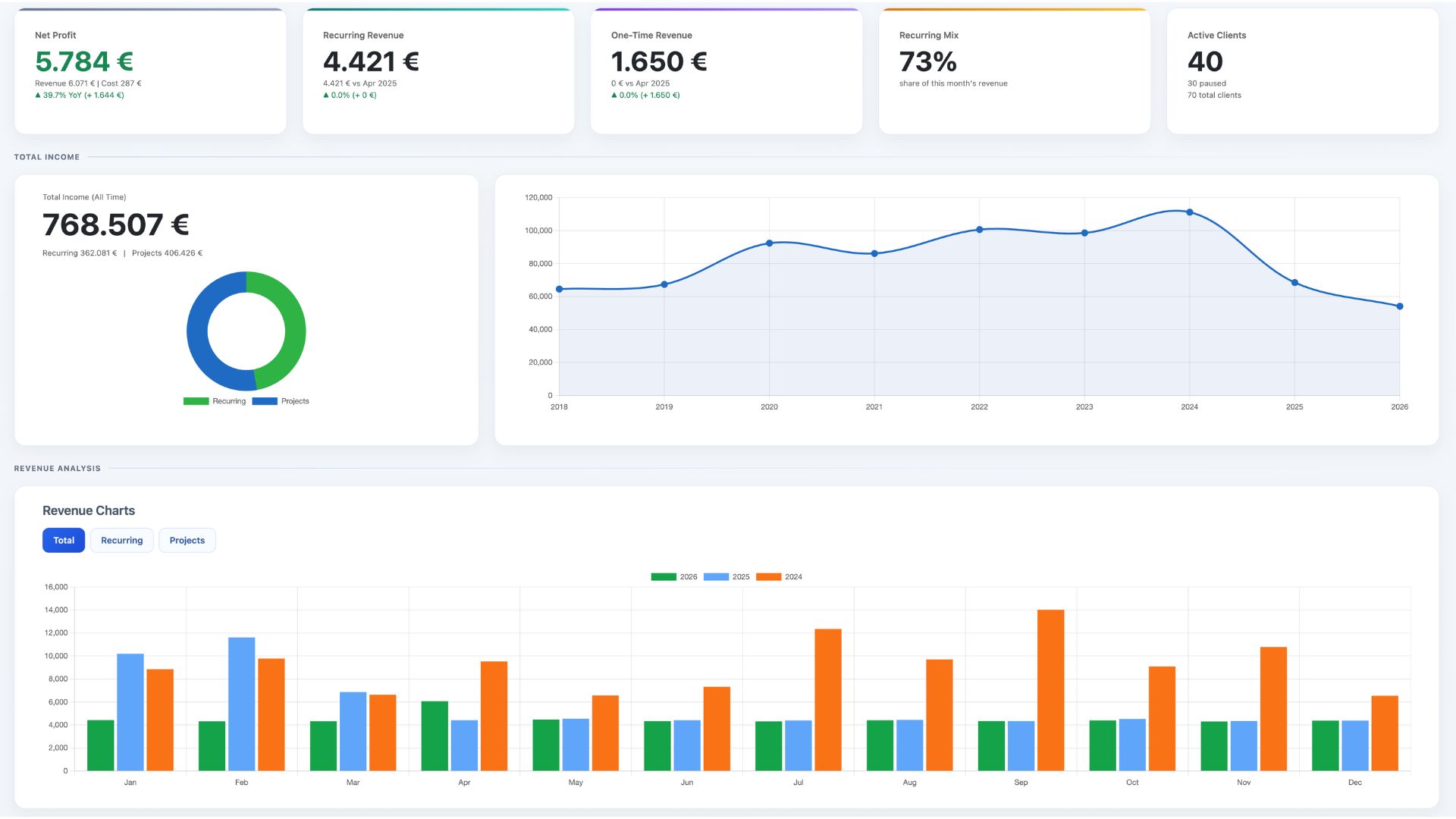
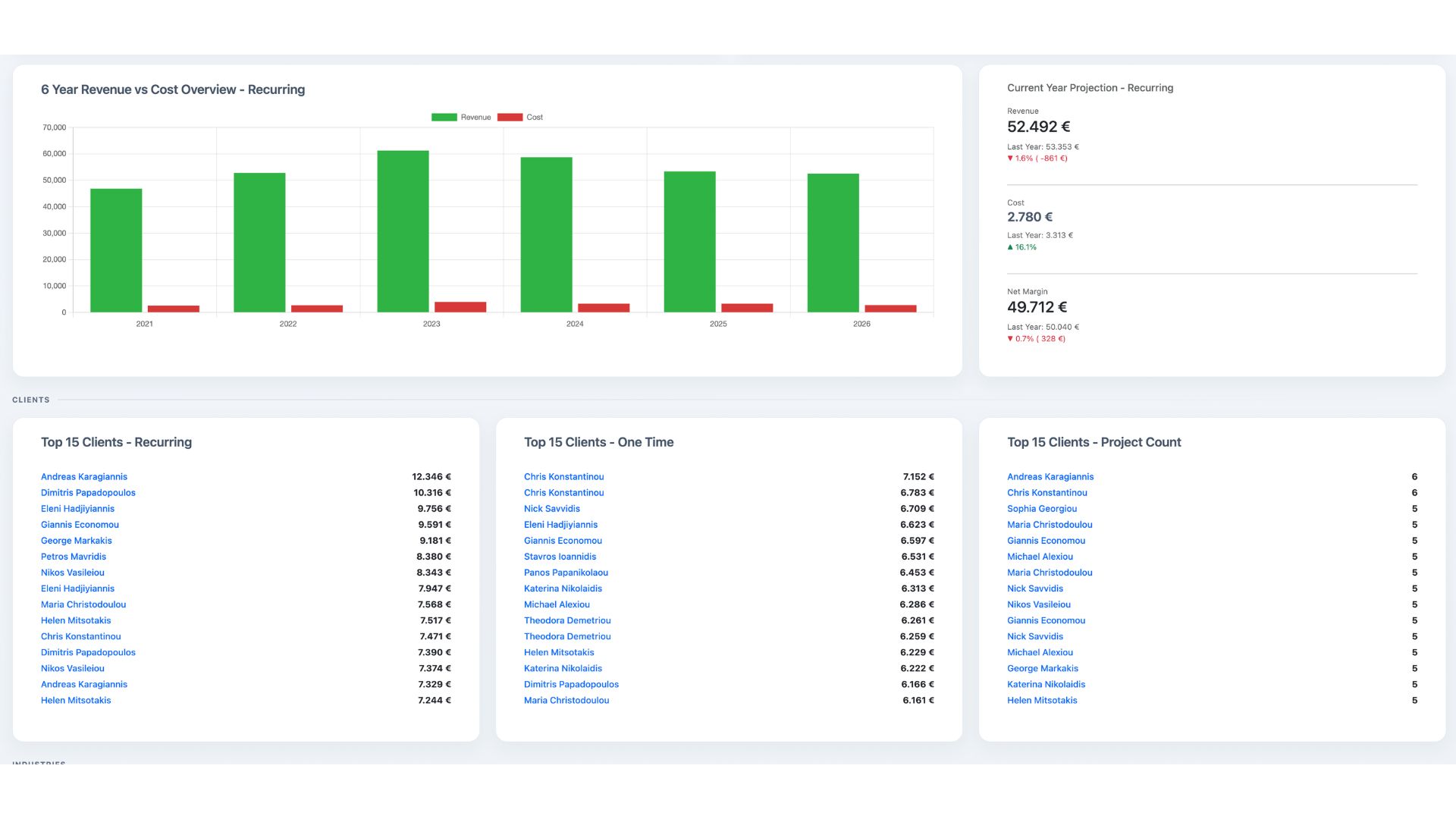
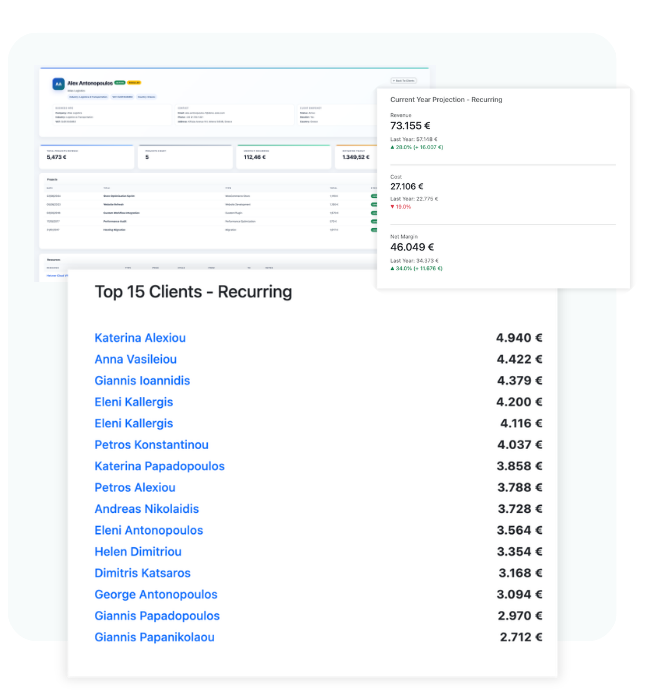
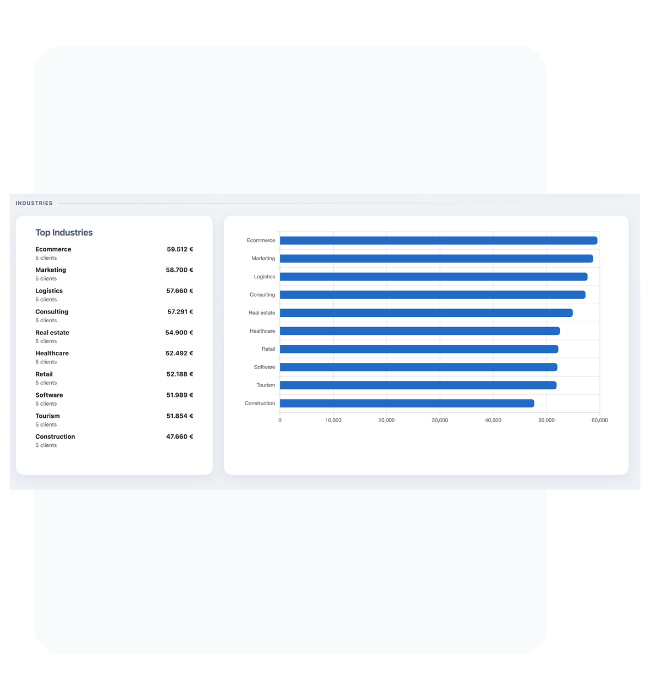
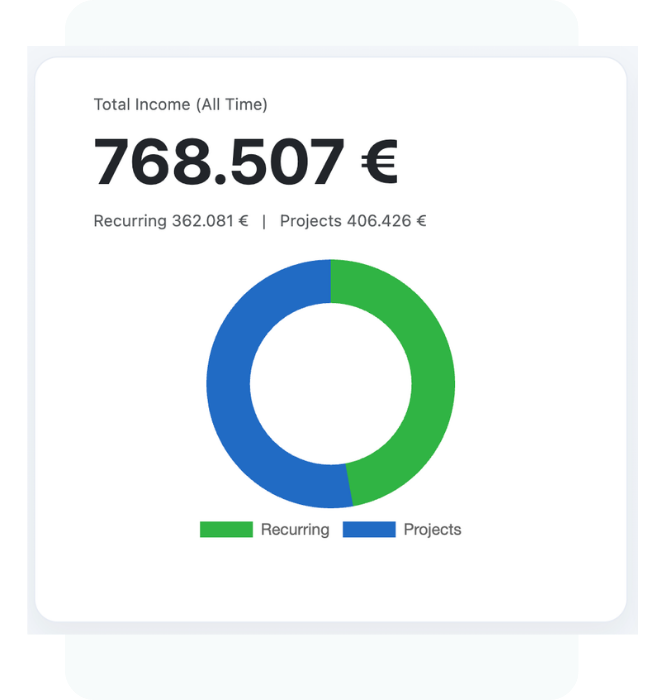
With a tool like SokoCRM, you can see all renewals and revenue in one place.
What actually matters
It’s not just about not missing a renewal.
It’s about being able to instantly answer:
- How much money is coming in next month?
- What revenue is stable?
- Which clients are the most valuable?
- Where is the risk?
Whithout:
- Excel
- manual calculations
- multiple disconnected tools
Conclusion
Most developers don’t have a problem with tools.
They have a problem with how their data is structured.
And that leads to one key issue:
– They don’t have a clear view of their recurring revenue
And without that visibility:
– you can’t forecast
– you can’t optimize
– you can’t grow
If this sounds familiar, then you probably don’t need more data.
– You need better visibility.