
If you ask most freelancers or small agencies if they track monthly income how much they made last month, they’ll give you a number.
But if you ask them:
…things get unclear very quickly.
Tracking income isn’t the problem.
Understanding your income is.
Why Most Freelancers Don’t Really Know Their Monthly Income
At first, everything seems simple.
You send invoices.
You receive payments.
You check your bank account.
But after a few months (or years), things get messy:
So even if you “track income”, you don’t really know:
Track Monthly Income Easily
To get clarity, you need to stop thinking in terms of payments and start thinking in terms of structure.
A simple system looks like this:
1. Separate recurring and one-time income
2. Track income per month (not per invoice)
Instead of asking:
“What did I get paid?”
Ask:
“What income belongs to this month?”
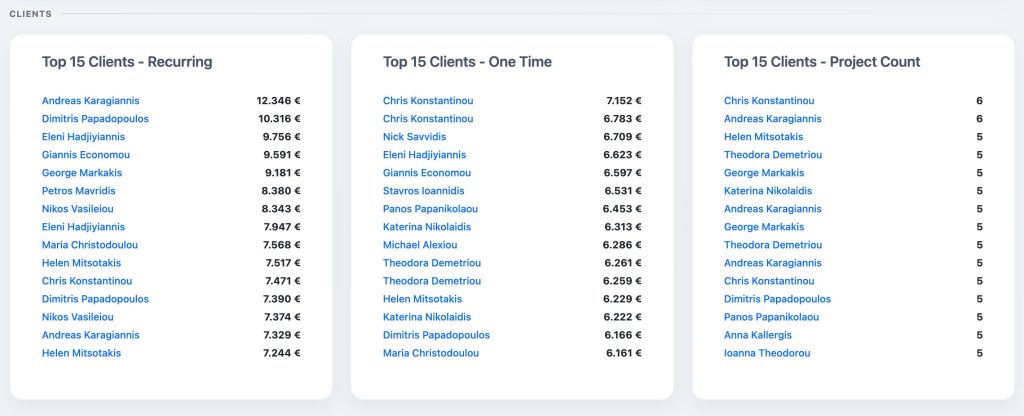
3. Connect income to clients
Your income doesn’t come from “money”.
It comes from clients.
The Problem With Spreadsheets
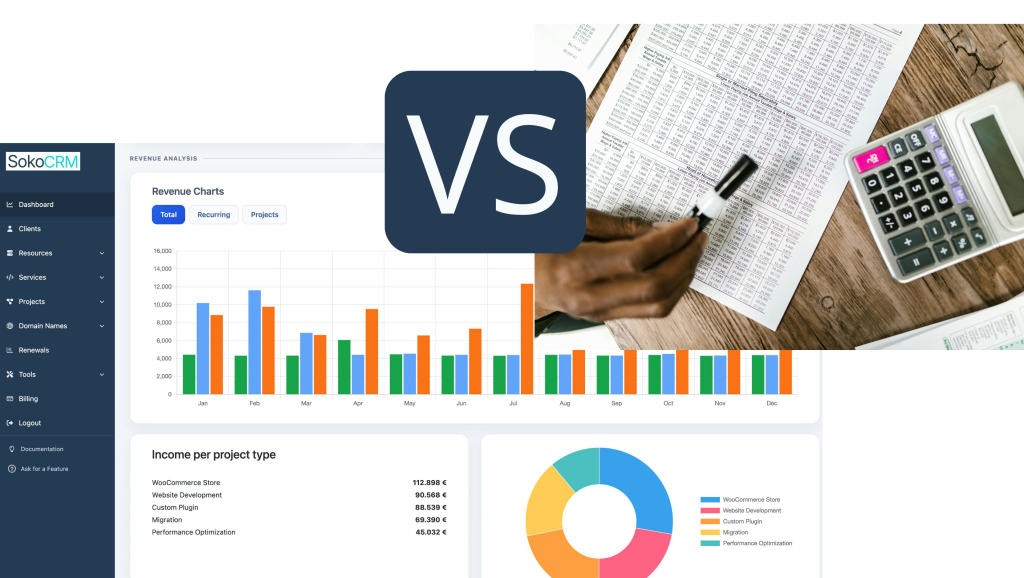
Most freelancers try to solve this with Excel or Google Sheets.
And it works… for a while.
But eventually:
The Missing Piece: Recurring Revenue
Stop tracking only income — start tracking recurring revenue.
Recurring revenue shows you:
(Future internal link: /blog/what-is-recurring-revenue/)
The Real Upgrade: Client Value
Instead of asking:
“How much did I earn this month?”
Ask:
“How much value does each client bring over time?”
Some clients:
Others:
How I Solved This After 12 Years
After years of working with clients:
I didn’t need better invoices.
I needed clarity over time.
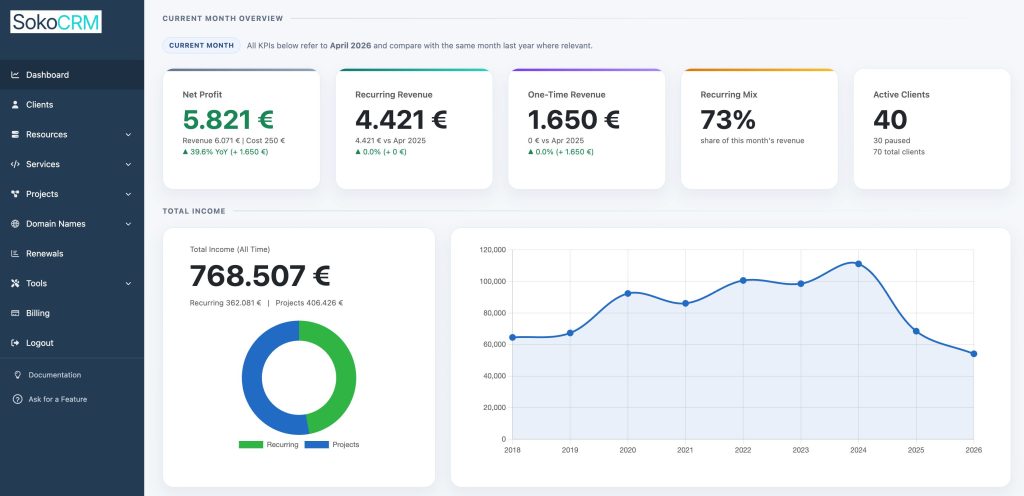
So I built a system where:
A Simpler Way to Do This (Without Spreadsheets)
This is exactly how SokoCRM works.
Instead of tracking payments manually:
Final Thoughts
If you’re a freelancer or agency, tracking income is not enough.
You need:
Once you have that:
If you’re still using spreadsheets, you’re tracking the past.
At the end of the day, your goal isn’t just to track numbers — it’s to understand how your business actually works. When you clearly see your monthly income, your recurring revenue, and the real value of your clients, you stop making decisions based on guesswork. You start planning with confidence. You know what to improve, what to repeat, and what to avoid. Whether you use a simple system or a dedicated tool, the important thing is to move beyond scattered data and build a clear, structured view of your business over time. That clarity is what turns effort into real growth.
To grow, you need to understand the future.
Recurring Revenue explanation
https://www.investopedia.com/terms/r/recurringrevenue.asp
Customer Lifetime Value (client value)
https://www.investopedia.com/terms/c/customerlifetimevalue.asp